5.00
(2 Ratings)

Energy Systems – Aerobic, Anaerobic and A-Lactic – 1 USAT Adjunct CEU
About Course

Energy Systems – Aerobic, Anaerobic and A-Lactic


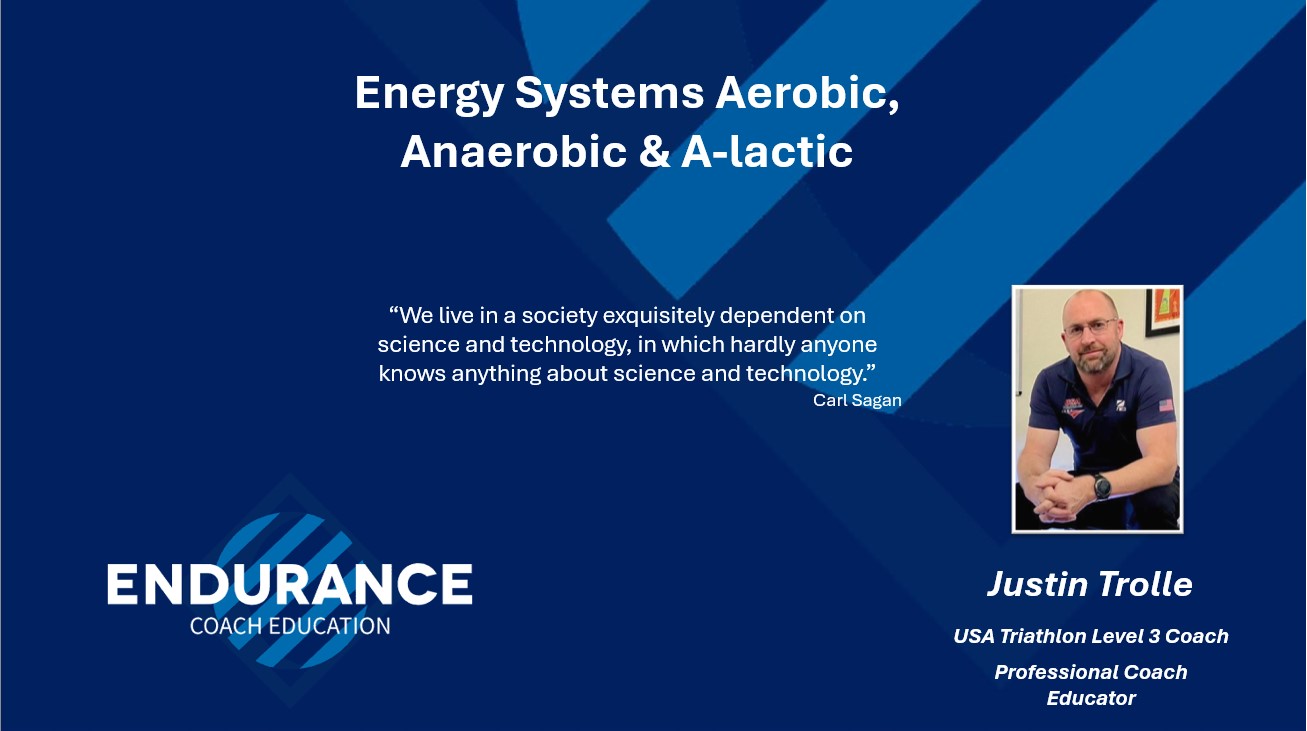
This comprehensive presentation delves into the intricate world of energy systems in endurance sports, focusing on aerobic, anaerobic, and alactic metabolism. The speaker, Justin Trolle, emphasizes the importance of understanding and effectively training all three systems for optimal athletic performance.


Learners will gain insights into the characteristics and functions of each energy system, including their roles in different intensities and durations of exercise. The presentation covers how these systems interact and overlap during various athletic activities, dispelling the common misconception that they operate in isolation.


The content explores practical applications of this knowledge, including how to test and monitor improvements in each system. Participants will learn about training zones, their physiological basis, and how to implement them effectively in training programs. The speaker stresses the importance of tailoring training zones to individual athletes and specific training objectives.


A significant portion of the presentation is dedicated to work-to-rest ratios, an often overlooked but crucial aspect of training design. Learners will understand how manipulating these ratios can target specific energy systems and adaptations.


The presentation also covers testing protocols for swimming, cycling, and running, providing coaches with valuable tools to assess athlete progress and inform training decisions. Emphasis is placed on interpreting test results to understand not just if an athlete has improved, but how and why.


Overall, participants will come away with a deeper understanding of energy systems, practical tools for training design and assessment, and the ability to make more informed coaching decisions. This knowledge will enable coaches to optimize their athletes’ training and performance across various endurance disciplines.


What Will You Learn?

  • Key Topics Covered:
  • Understanding aerobic, anaerobic, and alactic energy systems
  • Optimizing training zones for peak performance
  • Mastering work-to-rest ratios for targeted adaptations
  • Effective testing protocols for swimming, cycling, and running
  • Interpreting performance data for smarter coaching decisions

Course Content

Energy systems – Aerobic, Anaerobic and A-Lactic
This comprehensive presentation delves into the intricate world of energy systems in endurance sports, focusing on aerobic, anaerobic, and alactic metabolism. The speaker, Justin Trolle, emphasizes the importance of understanding and effectively training all three systems for optimal athletic performance. Learners will gain insights into the characteristics and functions of each energy system, including their roles in different intensities and durations of exercise. The presentation covers how these systems interact and overlap during various athletic activities, dispelling the common misconception that they operate in isolation. The content explores practical applications of this knowledge, including how to test and monitor improvements in each system. Participants will learn about training zones, their physiological basis, and how to implement them effectively in training programs. The speaker stresses the importance of tailoring training zones to individual athletes and specific training objectives. A significant portion of the presentation is dedicated to work-to-rest ratios, an often overlooked but crucial aspect of training design. Learners will understand how manipulating these ratios can target specific energy systems and adaptations. The presentation also covers testing protocols for swimming, cycling, and running, providing coaches with valuable tools to assess athlete progress and inform training decisions. Emphasis is placed on interpreting test results to understand not just if an athlete has improved, but how and why. Overall, participants will come away with a deeper understanding of energy systems, practical tools for training design and assessment, and the ability to make more informed coaching decisions. This knowledge will enable coaches to optimize their athletes' training and performance across various endurance disciplines.

  • Eneergy systems – Aerobic, Anaerobic and A-Lactic
    01:10:16
  • Energy Systems Quiz – P1

Student Ratings & Reviews

5.0
Total 2 Ratings
5
2 Ratings
4
0 Rating
3
0 Rating
2
0 Rating
1
0 Rating
JH
1 year ago
I appreciate the review pf systems and zones
WK
1 year ago
NA